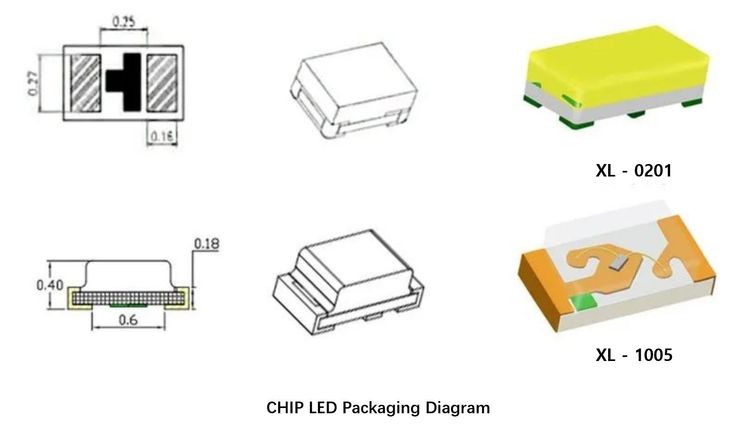
Opening As electronic devices continue to shrink while performance expectations rise, lighting components are under growing pressure to deliver more output from less space. A common misconception is that higher brightness inevitably requires larger packages or higher power consumption. This article explains how Chip LED packaging challenges that assumption, and why compact SMT LEDs have become a practical solution for engineers balancing efficiency, reliability, and design flexibility.
💡 What’s Changing Advances in LED chip fabrication and thermal management have made it possible to integrate high-brightness emitters into ultra-thin surface-mount packages. Modern Chip LED packaging uses low-power chips—often no larger than a pencil tip—while maintaining stable luminous output and electrical performance. Improvements in encapsulation materials and electrode design also enhance durability, allowing these LEDs to operate consistently in environments exposed to vibration, temperature variation, or long duty cycles.
👇 Why Old Assumptions No Longer Work Traditional design logic linked brightness directly to package size and power draw. That assumption no longer holds. High-efficiency dies and optimized optical structures now allow compact LEDs to achieve illumination levels once reserved for larger components. Relying on oversized packages can lead to unnecessary PCB area usage, higher thermal loads, and reduced layout flexibility—constraints that are increasingly incompatible with modern product architectures.
🚀 Implications for OEM / EMS / Procurement For OEMs and EMS providers, Chip LED packaging changes both technical and sourcing considerations. Smaller footprints free up board space for additional functionality or enable thinner end products. Lower power consumption helps manage thermal budgets and extend system lifespan. From a procurement perspective, standardized SMT formats simplify assembly processes, reduce placement complexity, and support scalable manufacturing across multiple product lines.
🔒 How Smart Teams Are Responding Engineering teams are increasingly selecting LEDs based on system-level efficiency rather than raw size or nominal brightness. By integrating Chip LED packaging into navigation systems, mobile devices, industrial control panels, traffic indicators, backlit keyboards, and display modules, they achieve compact, durable, and energy-efficient lighting without compromising reliability. The focus has shifted toward balanced designs that align optical performance, mechanical constraints, and long-term operational stability.
Closing Thought As device designs continue to evolve, compact lighting solutions are no longer a compromise—they are an enabler. Ongoing technical discussion and careful evaluation of packaging choices remain essential for teams aiming to build efficient and resilient electronic systems.
#Chip LED #LED Packaging #SMT Lighting #Electronics Design #Backlight Technology