🔑 Key Takeaways • The Event: Global semiconductor sales are projected to surpass USD 1 trillion in 2026 for the first time in history. • The Cause: AI compute, data centers, advanced logic, and a synchronized memory rebound are driving structurally higher demand. • The Implication: The industry is entering a new expansion phase, reshaping capacity planning, capital allocation, and supply-chain strategy.
🚀 Opening The global semiconductor industry is approaching a historic inflection point. In 2026, annual chip sales are expected to exceed USD 1 trillion, a threshold long discussed but never reached. This milestone is not simply the result of a cyclical rebound—it reflects a fundamental expansion in the role semiconductors play across computing, infrastructure, and intelligent systems worldwide.
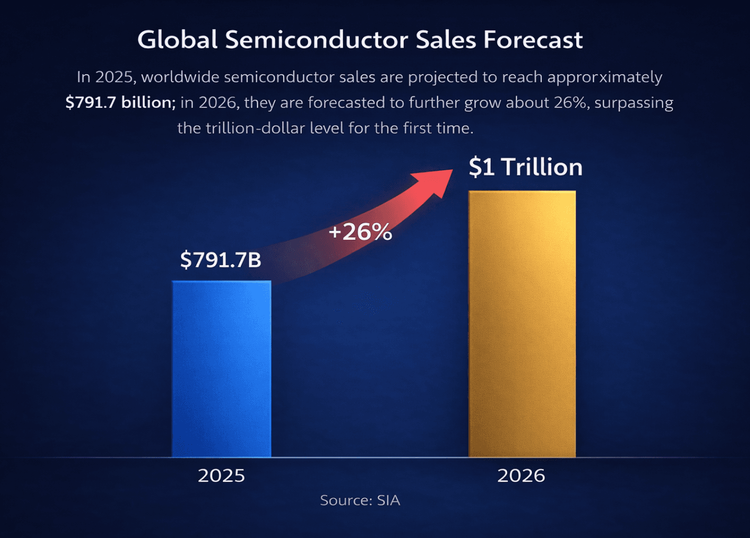
📈 What’s Changing According to the latest industry outlook from Semiconductor Industry Association, global semiconductor sales reached USD 791.7 billion in 2025, representing year-over-year growth of 25.6%. For 2026, sales are forecast to grow by approximately another 26%, pushing total industry revenue beyond the trillion-dollar mark.
This acceleration is being driven by a sharp increase in silicon content per system. AI workloads, cloud-scale data centers, advanced networking, and intelligent edge devices are consuming far more compute and memory than previous technology cycles.
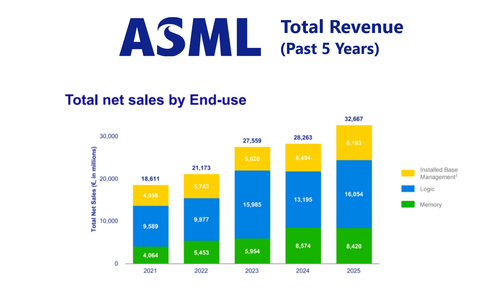
🧠 Key Growth Engines Logic devices are at the center of this expansion. AI training and inference workloads are driving unprecedented demand for advanced CPUs, GPUs, and custom accelerators, all produced at leading-edge process nodes with high wafer intensity.
At the same time, memory markets are entering a synchronized recovery. Rising demand from AI servers and enterprise infrastructure is improving utilization, lifting pricing, and restoring shipment growth across DRAM and NAND categories after a prolonged downturn.
📊 Structural vs. Cyclical Growth Unlike prior semiconductor upcycles, the current expansion is not anchored to a single end market such as smartphones or PCs. Instead, growth is distributed across multiple long-duration platforms—AI infrastructure, automotive electronics, industrial systems, and next-generation wireless networks. This diversification reduces the industry’s dependence on any one demand driver and supports a higher long-term revenue baseline.
🌍 A Globally Distributed Effort Crossing the USD 1 trillion threshold reflects coordinated global participation. Asia continues to dominate manufacturing, assembly, and advanced packaging capacity. The United States and Europe remain central to chip architecture, software ecosystems, and system-level innovation. Meanwhile, emerging markets are accelerating their roles as both consumers and contributors within the semiconductor value chain.
This geographic balance is reinforcing supply-chain interdependence rather than regional isolation.
🏭 Implications for OEMs, EMS, and Procurement For OEM and EMS organizations, a trillion-dollar semiconductor industry changes the planning framework. Capacity constraints, long lead-time equipment, and advanced-node concentration increase the importance of early forecasting and long-term supplier alignment. Semiconductors are no longer a purely cyclical cost variable but a strategic input shaping product roadmaps, capital expenditure, and risk management.
Teams that treat silicon availability as an afterthought will face rising exposure to volatility in both pricing and lead times.
🔚 Closing The semiconductor industry’s entry into the trillion-dollar era marks more than a revenue milestone. It signals a durable expansion in how deeply chips are embedded in the global economy. As AI, data infrastructure, and intelligent systems scale simultaneously, the next decade of electronics growth will be defined not by whether demand exists—but by how effectively the industry can support it.