Key Takeaways • The Event: XL-1005UWC is a 0402 (1.0×0.5×0.4 mm) cool white LED delivering up to 945 mcd at 20 mA with 120° viewing angle. • The Cause: Tight brightness, voltage, and chromaticity binning enables consistent optical performance in high-volume SMT production. • The Implication: Proper current regulation and thermal design are essential to ensure reliability across automotive, industrial, and consumer platforms.
🔎 Opening As PCB real estate continues to shrink, 0402 LEDs have become the default choice for compact HMI and backlight designs. XL-1005UWC addresses this demand with a balanced combination of luminous intensity, electrical stability, and SMT-ready packaging. This article outlines where and how it fits into modern OEM and EMS programs.
⚙️ What’s Changing Miniaturization in automotive dashboards, networking equipment, and portable electronics is driving a shift toward ultra-compact indicators. At the same time, procurement teams face tighter bin control requirements to avoid color deviation across large production batches.
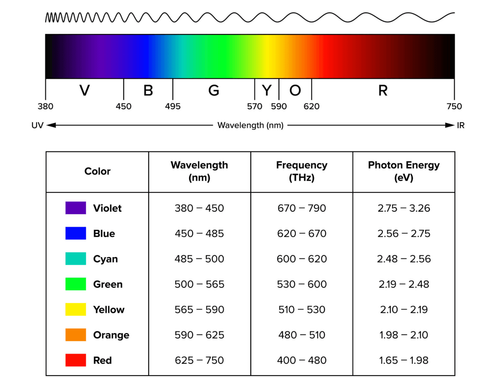
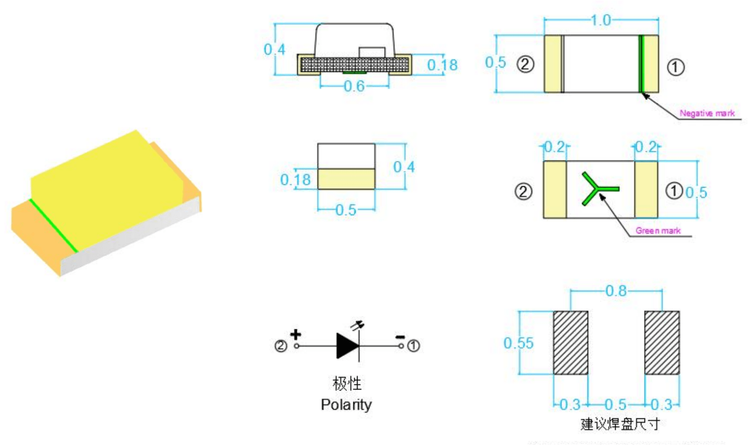
XL-1005UWC is specified at: • Luminous intensity: 420–945 mcd @ IF = 20 mA • Forward voltage: 2.6–3.3 V @ 20 mA • Viewing angle: 120° • CCT: up to 15000 K (cool white range) • Package size: 1.0 × 0.5 × 0.4 mm
With MSL 3–4 classification and ROHS compliance, it aligns with mainstream lead-free reflow assembly lines.
📊 Data and Electrical Positioning
Optical-Electrical Characteristics (Ta = 25°C): • Max continuous forward current: 20 mA • Peak forward current: 60 mA (pulse width ≤0.1 ms, duty ≤1/10) • Max power dissipation: 75 mW • Reverse voltage: 9 V • ESD resistance: 2000 V • Operating temperature: -40°C to +85°C
Brightness binning spans E1–E9 (350–1000 mcd), while forward voltage grading ranges from 2.6 V to 3.3 V in controlled increments. Chromaticity binning (CIE1931) maintains XY tolerance within ±0.01, critical for consistent backlight appearance across panels.
For procurement and quality teams, this structured bin architecture reduces mixed-lot optical variation and simplifies AVL management.
🧠 Why Old Assumptions No Longer Work Historically, small signal LEDs were treated as electrically forgiving components. In compact 0402 formats, this assumption no longer holds.
Three design risks are common:
Constant-voltage driving without current regulation, leading to current imbalance due to VF variation.
Ignoring thermal derating curves in enclosed assemblies.
Overlooking ESD exposure during high-speed pick-and-place handling.
As shown in the electrical guidance, even small VF shifts can significantly alter current if no series resistor or current driver is applied. In dense layouts, thermal accumulation may reduce luminous efficiency and shift chromaticity over time.
🏭 Implications for OEM / EMS / Procurement
For Hardware Engineers: • Implement constant-current or resistor-stabilized drive topology. • Respect derating above 25°C; luminous intensity decreases as ambient temperature rises. • Ensure pad design follows recommended solder pattern to avoid tombstoning in 0402 assembly.
For EMS Providers: • Reflow should not exceed two cycles. • Lead-free peak temperature up to 255°C (+0/-5°C) for 5–10 seconds. • Storage after opening: ≤30°C, ≤40% RH, use within 168 hours.
For Procurement: • Confirm brightness bin and VF bin alignment before mass production. • Manage moisture-sensitive handling (MSL 3–4). • Validate reel packaging consistency for automated placement.
🔧 How Smart Teams Are Responding
Leading OEM teams standardize around: • Controlled bin procurement policies (brightness + voltage + chromaticity). • Thermal simulation at PCB level for high-density indicator arrays. • ESD-safe handling environments with grounded equipment and wrist straps. • Baking procedures (60±5°C for 24h) when moisture exposure exceeds limits.
Rather than treating 0402 LEDs as commodity items, advanced programs evaluate optical consistency over product lifecycle, especially in automotive clusters and industrial control panels.
🚀 Application Scenarios
XL-1005UWC is commonly integrated into: • Automotive dashboard backlight keys and indicators • Industrial instrument panels • Consumer electronics status indicators • Router and set-top box front panels • Mobile device key illumination
Its 120° viewing angle and compact geometry make it suitable for light guide coupling and edge-lit structures.
🔒 Closing In high-volume SMT environments, consistency in binning, voltage control, and thermal design determines whether a small LED becomes a stable platform component or a field-return risk. XL-1005UWC provides a structured electrical and optical framework suitable for disciplined OEM integration.
For teams evaluating long-term platform stability in compact indicator design, it is worth reviewing bin strategy and drive topology early in the design cycle.