Jensen Huang Interview: CUDA, TPU, China, and the AI Supply Chain
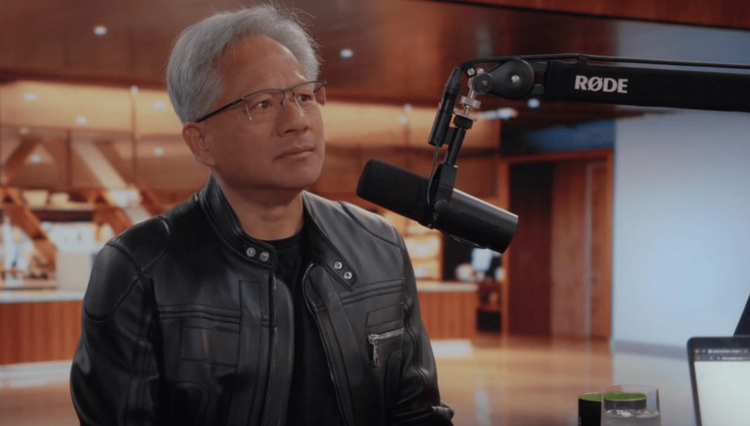
In a recent interview, Vlogger Dwarkesh Patel spoke with NVIDIA CEO Jensen Huang on TPU competition, AI chip supply chains, China policy, ecosystem strategy, and the future of computing.
Below is a structured and readable version of the discussion.
Key Takeaways (30 Points)
1.All capacity constraints can be solved within 2–3 years
2.CPU is like a Cadillac, comfortable and easy to use, while GPU is like an F1 race car
3.Elon Musk never asked for GPU priority
4.GPU orders follow first-come, first-served
5.NVIDIA rejects "highest bidder wins"
6.Regret missing Anthropic
7.Avoids picking winners and supports all ecosystem participants
8.ASIC solutions are still less reliable than NVIDIA platforms
9.No formal legal contract with TSMC
10.Vera Rubin, Rubin Ultra, and Feynman define future roadmap
11.China produces around 60 percent of global chips
12.China has top computer scientists
13.China has around 50 percent of global AI researchers
14.China is a competitor, not an enemy
15.China has massive compute capacity
16.China has abundant energy
17.China can aggregate chips at scale
18.Claims that China cannot build AI chips are incorrect
19.China is the largest contributor to open-source software
20.China is the largest contributor to open models
21.7nm process is already sufficient for AI
22.Splitting ecosystems is a strategic mistake
23.AI is fundamentally a parallel computing problem
24.MoE is a major innovation
25.DeepSeek is geopolitically important
26.x86 and ARM ecosystems are deeply entrenched
27.NVIDIA share in China has declined
28.Architecture and computer science matter most
29.NVIDIA would still be large even without AI
30.Without AI, Huang would be very sad
● Is NVIDIA’s Moat Supply Chain Control?
▶ Core Idea: Electrons to Tokens
Jensen Huang describes NVIDIA’s role as transforming electrons into tokens, positioning itself in the middle of this process.
This transformation is not commoditized. The most difficult part of the system is exactly what NVIDIA focuses on.
The company strategy is clear:
→ Do as little as possible, but what must be done is extremely difficult.
● Supply Chain Power Beyond Procurement
NVIDIA does not simply secure supply. It actively shapes the supply chain.
▶ Key mechanisms:
→ Communicating long-term demand signals
→ Aligning upstream investments
→ Leveraging downstream demand scale
Suppliers invest because NVIDIA has the ability to absorb large volumes and distribute them efficiently.
This creates a reinforcing loop:
Demand → Investment → Capacity → Ecosystem expansion
● Real Bottlenecks in AI Growth
▶ Key Insight: The constraint is not chips
Manufacturing bottlenecks such as packaging and memory can typically be resolved within two to three years.
The real limitation is:
!!! Energy !!!
Without sufficient energy:
→ Data centers cannot scale
→ AI factories cannot be built
→ Compute growth slows down
Energy infrastructure evolves more slowly than semiconductor manufacturing.
● TPU vs GPU: Fundamental Difference
▶ GPU (Accelerated Computing)
→ High flexibility
→ Fully programmable
→ Broad application coverage
▶ TPU / ASIC
→ Task-specific optimization
→ Limited flexibility
→ Narrower application scope
▶ Core conclusion:
AI is not only matrix multiplication.
Future models require:
→ Programmability
→ Algorithm innovation
→ Architectural flexibility
Breakthroughs come from the combination of:
Architecture + Software + Algorithms
● CUDA’s Real Barrier
CUDA is not just a software tool. It is a system-level ecosystem.
▶ Three core layers:
→ Large global developer base
→ Deep software and framework integration
→ Deployment across all major cloud platforms
Result:
→ Hundreds of millions of GPUs deployed
→ Universal cloud adoption
→ Default platform for AI development
This creates a powerful flywheel:
Users → Software → Ecosystem → More users
● Why NVIDIA Does Not Become a Cloud Provider
▶ Core principle:
Do as much as needed, but as little as possible
Meaning:
→ Focus only on what others cannot do
→ Avoid competing with ecosystem partners
Execution:
→ Invest in AI cloud players (NeoClouds)
→ Support ecosystem growth instead of replacing it
● GPU Allocation Strategy
NVIDIA follows a consistent allocation model:
→ First-come, first-served
→ No bidding system
→ Stable pricing
▶ Key reasoning:
“Highest bidder wins” destroys trust.
NVIDIA positions itself as:
→ A long-term infrastructure provider
→ A predictable and reliable supplier
● China: Compute, Energy, and Ecosystem
▶ Resource overview:
→ Around 60 percent of global chip production
→ Around 50 percent of AI researchers
→ Significant energy availability
▶ Capability assessment:
→ Able to design and manufacture AI chips
→ Able to scale compute through volume
▶ Core logic:
AI = Parallel Computing + Energy
Implication:
→ More energy enables more compute
→ Scale can compensate for process gaps
7nm process technology is already sufficient for many AI workloads.
● Export Control Debate
▶ Potential risks:
→ Loss of a major global market
→ Emergence of alternative ecosystems
→ Reduced influence of US technology
▶ Key insight:
Ecosystem dominance matters more than restricting hardware access.
Competition is about:
→ Technology stacks
→ Developer ecosystems
→ Global deployment
● Final Conclusions
NVIDIA’s competitive advantage is systemic
It includes:
→ Architecture
→ CUDA software ecosystem
→ Supply chain coordination
→ Global deployment scaleAI competition is not purely hardware-driven
→ Algorithm innovation drives major gains
→ Computer science plays a central roleThe real competition is ecosystem control
→ Developer adoption
→ Platform standardization
→ Technology stack dominance
These factors matter more than any single chip advantage.