Key Takeaways
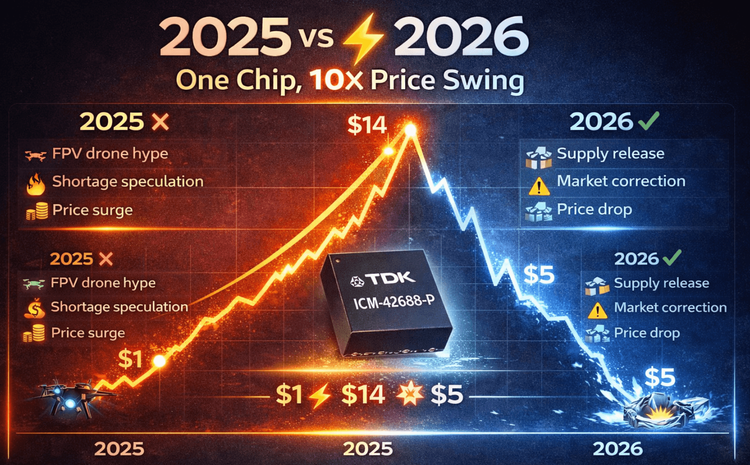
• The Event: ICM-42688-P prices surged 10x within months, then dropped ~50% in a week.
• The Cause: Drone demand spike + long lead times + constrained distribution amplified supply-demand imbalance.
• The Implication: IMU design lock-in creates procurement risk cycles, exposing OEMs to sudden cost volatility.
📌 Opening
From a low-cost MEMS sensor to one of the most traded spot components in the drone ecosystem, ICM-42688-P experienced an unusually sharp price cycle between September 2025 and April 2026. This article breaks down how a niche IMU became a supply chain focal point—and why its volatility matters beyond a single part number.
📈 01 From ¥8 to ¥100: Price Trajectory of ICM-42688-P
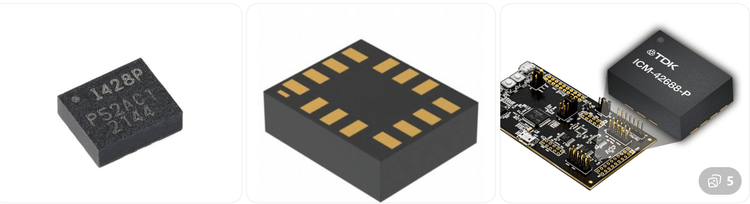
To understand the price movement, it is necessary to clarify what ICM-42688-P is.
ICM-42688-P is a 6-axis IMU from TDK Corporation’s InvenSense division, integrating a 3-axis gyroscope and 3-axis accelerometer. It targets applications requiring high motion accuracy, including drones, robotics, AR/VR, and wearables.
In drone flight controllers, gyroscope precision directly impacts attitude stability, while accelerometers play a secondary role. As a result, the industry often refers to such IMUs simply as “gyros.”
In simple terms, the device enables precise sensing of motion—acceleration, rotation, and orientation—which is critical for stable drone flight. Leading drone OEMs adopted ICM-42688-P due to its performance advantages.
The price evolution over ~8 months shows four distinct phases:
September 2025: Initial tightening. Price moved from ~¥9 to ¥10–13. Inventory visibility dropped.
November 2025: Acceleration. Prices doubled to ~¥23–28 as awareness increased.
December 2025: Temporary plateau around ¥25 due to demand resistance.
January–March 2026: انفlection. Prices surged to ¥70–100 amid broader market speculation and sentiment.
Late March 2026: Correction. Supply release rumors triggered a rapid ~50% drop to ~¥35–40.
📊 Data/Comparison
Lead time evolution illustrates supply tightening:
Pre-Q4 2025: ~30 weeks
Feb 2026: ~40 weeks
Mar 2026: ~45 weeks
Alternative parts also followed:
ICM-42607-P increased from low single-digit RMB to >¥10
Other IMUs like Bosch BMI270 and legacy MPU series saw renewed attention
⚙️ What’s Changing
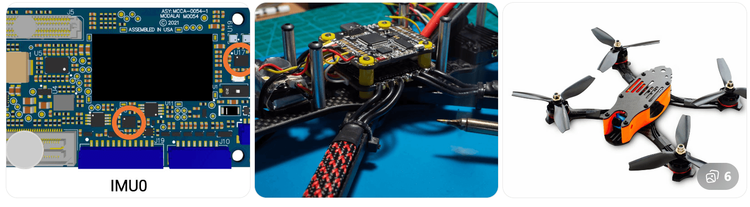
The underlying shift is not purely supply-driven—it is design migration.
Historically, MPU6000 dominated FPV drone designs. However, as performance requirements increased, alternatives such as ICM20689 and BMI270 exposed limitations.
Since 2023, ICM-42688-P gained traction due to:
Improved noise performance
Competitive pricing (initially)
Better suitability for high-performance flight stacks
A key inflection point was endorsement by Betaflight, widely used in FPV controllers. Once validated, adoption scaled rapidly across manufacturers.
🧠 Why Old Assumptions No Longer Work
The traditional assumption—that MEMS sensors are interchangeable commodities—no longer holds in drone systems.
Three structural realities explain this:
Design Lock-in
Once a flight controller design is validated, switching IMUs requires months of redesign, tuning, and certification.
Performance Sensitivity
Small differences in gyro noise or filtering behavior significantly affect flight stability.
Supply Chain Opacity
OEMs and distributors lack visibility into upstream wafer allocation and inventory buffers.
As a result, even when alternatives exist, they are not immediately viable at scale.
🏭 Implications for OEM / EMS / Procurement
The ICM-42688-P cycle highlights several procurement risks:
BOM Volatility: A sub-$2 component can temporarily behave like a constrained ASIC.
Lead Time Risk: 30 → 45 weeks disrupts production planning cycles.
Channel Fragmentation: Authorized distribution tightened supply, pushing buyers into spot markets.
Inventory Exposure: Late entrants risk holding high-cost stock during corrections.
For EMS providers, this creates mismatch risk between contracted pricing and actual component cost.
🚀 How Smart Teams Are Responding
Leading teams are adjusting in several ways:
Dual-sourcing IMU architectures at design stage
Accelerating validation pipelines for alternative sensors
Increasing buffer stock selectively—not across all SKUs
Monitoring firmware ecosystem signals (e.g., Betaflight support) as early indicators
Notably, some OEMs began validating second-source IMUs during the price peak—preparing for future cycles rather than reacting late.
🔚 Closing
The ICM-42688-P case is not an isolated anomaly but a reflection of tighter coupling between design ecosystems and supply chains in the drone industry.
For procurement and engineering teams, the lesson is clear: component risk is no longer just about availability—it is about ecosystem dependency.
Reach out to discuss resilience strategies for IMU sourcing and drone BOM stability.