💡 Key Takeaways
• Memory prices increased up to 7x in the past year due to AI demand
• The Big Three manufacturers prioritize AI data centers over consumer electronics
• OEMs face 3-year prepayment requirements and 12-16 week lead times
🎯 Opening
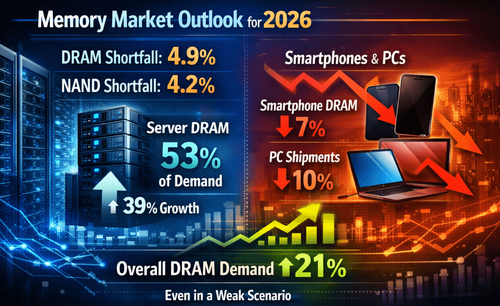
The memory market is experiencing a structural shift driven by AI data center demand. Samsung, SK Hynix, and Micron cannot simultaneously satisfy AI and consumer electronics requirements, creating allocation constraints and price pressure.
📊 What's Changing
Memory production capacity has shifted dramatically toward AI applications. Cloud providers Amazon, Google, and Microsoft aggressively acquired memory and storage during 2020-2023 to support remote work infrastructure. This created a consumption pattern that prioritized data center capacity over consumer electronics.
Storage and memory expert Thomas Coughlin told IEEE Spectrum that there was minimal investment in new production capacity throughout 2024 and most of 2025. By late 2025, the shortage became apparent across multiple sectors.
📗 Data / Comparison
Memory prices have escalated significantly:
• DRAM and NAND prices: Up to 7x increase over the past year
• Prepayment requirements: 3 years upfront (unprecedented in electronics industry)
• Lead times: 12-16 weeks for automotive-grade components
• HDD supply: Western Digital sold out 2026 capacity less than two months into the year
🔍 Why Old Assumptions No Longer Work
Traditional sourcing models assumed balanced allocation between consumer and data center markets. This assumption no longer holds. Memory manufacturers now face a choice: serve AI data centers with premium pricing or consumer electronics with lower margins.
The structural shift means that spot market sourcing carries significant risk. OEMs relying on market availability may find themselves unable to secure components, even at higher prices.
⚡ Implications for OEM / EMS / Procurement
Cost structures are being disrupted across multiple industries:
• Consumer electronics: BOM costs increasing 15-25% due to memory price hikes
• Automotive: Toyota paused hybrid model sales due to chip shortages
• Gaming consoles: Sony considers delaying next PlayStation to 2028-2029
• Network equipment: Router and set-top box manufacturers facing allocation constraints
Procurement teams must adapt to longer planning cycles and stricter payment terms.
🚀 How Smart Teams Are Responding
Leading organizations are implementing strategic responses:
• Long-term contracts: Securing allocation through multi-year agreements
• Alternative sourcing: Diversifying suppliers across regions
• Design optimization: Reducing memory requirements through efficient architecture
• Inventory buffering: Building strategic reserves for critical components
Some manufacturers are exploring direct partnerships with memory suppliers, bypassing traditional distribution channels to secure reliable allocation.
✨ Closing
The memory crisis is not a temporary shortage but a structural market shift. OEMs and EMS providers must rethink sourcing strategies to navigate this new reality. Building resilience through strategic partnerships and diversified supply chains will be critical for maintaining production schedules and competitive pricing. Reach out to discuss resilience strategies for your supply chain.