Key Takeaways
• The Event: Clawdbot’s rapid adoption signals a broader move from “chatting” systems to autonomous agents that execute tasks end-to-end.
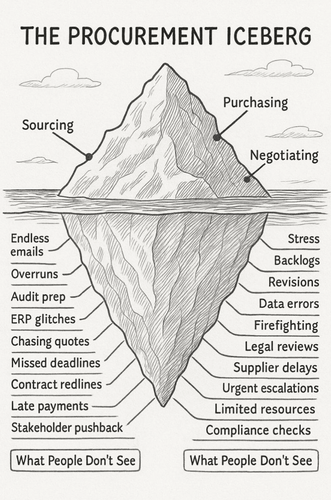
• The Cause: Communication-heavy workflows dominate procurement, creating friction, latency, and hidden cost.
• The Implication: Supply chain efficiency will increasingly depend on execution logic, not message volume.
🚀 Opening
A GitHub project reaching 38,000 stars rarely matters to supply chain professionals. Clawdbot is different. Its popularity is not about code elegance, but about a structural shift: AI systems are no longer just advising humans, they are acting on their behalf. This distinction mirrors a long-standing inefficiency in electronic component sourcing.
🔄 What’s Changing
Clawdbot represents the transition from chat-based tools to autonomous agents. Instead of explaining how to solve a problem, it logs in, executes commands, and verifies outcomes. This mirrors a broader trend across enterprise systems: intelligence is being embedded directly into workflows, not layered on top as guidance.
📊 Data / Comparison
In traditional sourcing workflows, a single RFQ cycle may involve 10–20 emails, multiple manual checks of stock status, and repeated human interpretation of datasheets and compliance documents. By contrast, agent-based workflows compress these steps into automated decision paths that execute in minutes rather than days.
🧠 Why Old Assumptions No Longer Work
For decades, procurement efficiency was assumed to scale with better communication: faster email responses, clearer RFQ templates, more supplier calls. This assumption breaks down at scale. Every handoff introduces delay, inconsistency, and bias. Chat-based systems accelerate conversation, but they do not remove the underlying execution gap.
📦 Implications for OEM / EMS / Procurement
As BOM complexity increases and lifecycle volatility accelerates, manual sourcing logic becomes a structural risk. Delays in alternative matching, compliance verification, or lead-time comparison directly translate into line-down exposure and margin erosion. Execution speed is now a competitive parameter.
⚙️ How Smart Teams Are Responding
Forward-looking teams are decomposing sourcing into executable logic: certification checks, parametric matching, pricing vs. lead-time tradeoffs. Whether handled by software agents or tightly structured human workflows, the focus shifts from “asking” to “verifying and acting.” The goal is not to remove humans, but to reserve human judgment for exceptions, not repetition.
🔒 Closing
Clawdbot’s lesson is not about AI hype. It is about a simple truth: efficiency is lost in the gap between talking and doing. Supply chains that close this gap will define the next decade of procurement resilience. Quietly evaluating where execution can replace conversation is now a strategic necessity.