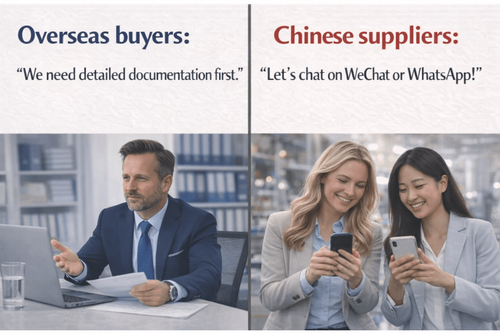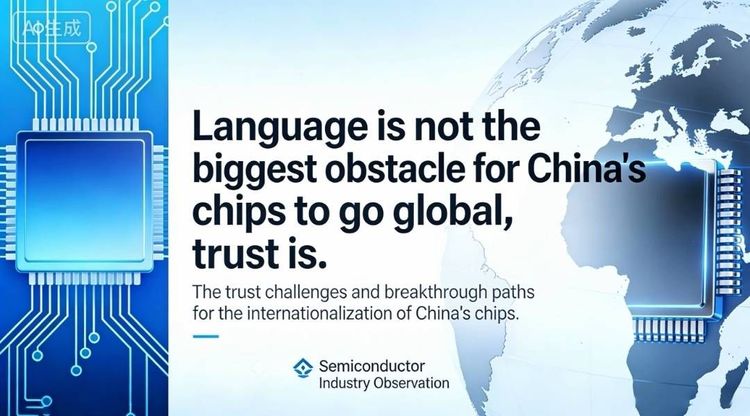
Over the past two years, Chinese chip companies have faced a core challenge in going global.
Language is not the biggest barrier — trust is.
A Mexico OEM procurement manager asks you on WhatsApp: "What temperature can this batch of 3528 LED withstand? What's the CRI? Do you have automotive certification?"
If you reply with translation software, they can feel it — stiff tone, inaccurate terminology, discounted professionalism. After three such communications, they will turn to Taiwan or South Korean suppliers.
AI agents are changing everything.
Language: From "Translation Tone" to "Professional Native Tone"
Traditional Model: Google Translate → Manual Review → Send
New Model: AI agents respond directly with terminology, tone, and context familiar to procurement managers.
Example:
- ❌ "This LED has high temperature resistance, CRI is 90+."
- ✅ "Rated up to 120°C junction temperature, CRI 93+, with IATF 16949 automotive certification."
The difference: The latter is what procurement managers hear daily — not translated language.
Trust: From "Off the Supplier List" to "Data-Driven Verification"
Core concerns of overseas procurement:
- "Is this company reliable?"
- "If there's a problem, can I reach someone?"
- "How consistent are batches?"
How AI agents solve this:
a) Real-Time Data Transparency
- Record test data for every shipment (bin sorting, CRI, VF distribution)
- Auto-generate batch reports (PDF/Excel)
- WhatsApp auto-send: "Batch 2408 shipped, test report attached"
b) Supply Chain Risk Visualization
- Integrate customs data, freight tracking, port congestion alerts
- Real-time updates: "ETA adjusted from 30 days to 25 days, Shenzhen port congestion eased"
- Proactive risk alerts: "XINGLIGHT raw material inventory tight, recommend ordering 3 weeks in advance"
c) Localized Response
- AI agents online 24/7 — Mexico procurement managers get instant responses even at 3 AM
- Context memory: Remember when they asked about "automotive-grade UV LEDs" — push relevant new products next time
Channels: From "Passively Waiting for Inquiries" to "Proactive Hunting"
Traditional Model:
- Alibaba International, LinkedIn posts waiting for inquiries
- Most inquiries are "price shoppers" — real conversion rate <3%
New AI Agent Model:
a) Email Intelligence Recognition
- Monitor client emails for purchasing requests
- AI analysis: "This procurement manager focuses on automotive lighting, recently looking for UV-C sterilization LEDs"
- Proactive contact: "Saw you're looking for UV-C 3535, we have 280nm stock available, test report attached"
b) WhatsApp Private Domain Operations
- AI agents don't spam — they push based on customer profiles
- Client A (automotive lighting): Push automotive-grade TOP LEDs, high-temperature test data
- Client B (indoor lighting): Push high-CRI 2835, luminous flux reports
c) Inquiry Prediction
- AI analyzes historical orders: "Client reorders every 45 days, last batch was 2409"
- Proactive contact 15 days early: "Next order planned for shipment, need to prepare stock?"
Service: From "After-Sales Issues" to "Preventive Service"
Traditional Model: Customer complaint → Tech support response → Problem resolution
AI Agent Model: Predict problems → Early warning → Customer unaware
a) Abnormal Batch Alerts
- AI detects Batch 2409 CRI distribution shift (average dropped from 93 to 91)
- Proactive notification: "Detected Batch 2409 CRI slight decline, recommend replacing with Batch 2410, we've reserved stock for you"
b) Automated Technical Documentation
- Customer asks: "What's the thermal resistance of 3528 LED?"
- AI agent instant response: datasheet + measured thermal resistance curve + application recommendations
- No waiting for Chinese tech support to wake up, translate, and respond
Case Study: LDeepAI's Practice
Q4 2025, we used an AI agent to serve a Mexico automotive lighting client:
Problems:
- Client sent 3-5 WhatsApp messages weekly (technical questions, inventory inquiries, logistics tracking)
- Time difference meant China team was woken up at 3 AM to respond
- Customer satisfaction declined, client considered switching to Taiwan suppliers
Solutions:
- AI agent integrated with WhatsApp, 24/7 response
- Recorded all technical Q&A, built knowledge base
- Auto-matched batch data, test reports, logistics information
Results:
- Response time reduced from average 8 hours to <5 minutes
- Customer satisfaction rebounded, orders increased 40%
- China team shifted from "firefighting" to "strategy"
Core Changes Summary
| Traditional Model | AI Agent Model |
|---|---|
| Language translation | Professional native tone |
| Passive trust | Data-driven verification |
| Wait for inquiries | Proactive hunting |
| After-sales firefighting | Preventive service |
| Human-driven | AI + Human collaboration |
Future Outlook
AI agents won't replace humans — they'll let humans focus on high-value work:
- Negotiating large strategic orders
- Developing new products and technologies
- Building long-term partnerships
AI agents handle standardized processes:
- 24/7 customer response
- Data generation, report output
- Risk alerts, anomaly detection
The rules of the game for China chip export are being rewritten by AI agents.
It's not about whose chips are better — it's about who uses AI agents to make global procurement managers feel — "communicating with this company is as smooth as with local suppliers."
#AI #Semiconductors #SupplyChain #GlobalBusiness #AIAgents #LDeepAI