Behind the Recent Surge in Capacitor Prices: An Industry Analysis
The Current Market Situation: A 2-5x Price Increase
According to the latest intelligence circulating within semiconductor supply chains, recent quotes for resistors and capacitors have skyrocketed by 2 to 5 times. This surge is particularly pronounced in the capacitor segment. Prior to May, the price increases were largely confined to specific短缺 models—namely, High-Capacitance (High-Cap) High-Voltage Ceramic Capacitors and Tantalum Capacitors.
However, the landscape shifted dramatically in May. The price hikes expanded to include conventional Multi-Layer Ceramic Capacitors (MLCCs). By the end of May, the market sentiment began to ferment aggressively, entering a phase of "daily price adjustments"—a phenomenon where component prices change significantly every single day.
The Supply Crunch
Simultaneously, a severe shortage of inventory has begun to materialize. In IC trading circles and "sourcing groups" (exclusive procurement communities), messages frantically seeking supply have become constant. Currently, a significant number of authorized distributors report zero stock availability. This scarcity contrasts with the normal logical assumptions about market drivers.
The Logic of AI Demand vs. Market Reality
Normal Economic Logic: Typically, the surge in MLCC pricing is attributed to the explosive demand from Artificial Intelligence (AI) infrastructure.
Industry Data Analysis:
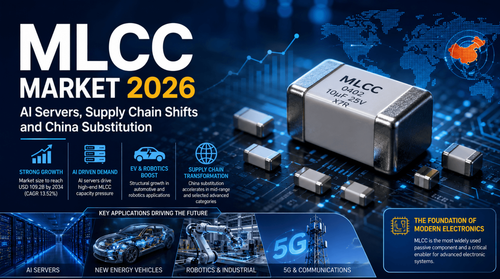
- Component Count: Current data indicates that a single AI server requires approximately 40,000 MLCCs. Future projections suggest this could rise to 60,000 units per server.
- Comparison: The demand for MLCCs from AI servers is 10 to 15 times that of a standard server.
- Technical Specifications: Crucially, over 90% of the MLCCs required for AI servers are high-end, high-capacitance, high-temperature resistant models.
- Pricing Disparity: The unit price for these specialized AI-grade MLCCs is 3 to 50 times higher than consumer-grade MLCCs.
The Contradiction: If the driver were purely AI, price increases should be isolated to high-end capacitors. However, the current market exhibits a broad-based price hike across the entire capacitor spectrum, including general-purpose components. What is the underlying reason behind this systemic inflation?
Below is an analysis from a senior industry insider regarding the mechanics of this market anomaly.
Analysis of the Supply Chain Dynamics
1. The Mix of Real Shortages and Speculation
The recent price increases in resistors and capacitors are driven by two distinct factors:
- Genuine Shortages: Certain specific models are experiencing true supply constraints.
- Pure Speculation: Other models are subject to market hype and hoarding.
2. The Timeline of Events
November 2025 (Est.): Leading manufacturers like Murata began extending lead times for certain high-capacitance models. Original Equipment Manufacturers (OEMs) quoted lead times of approximately 16-24 weeks, with slight price increases. While this caused concern, the market behavior remained relatively within normal parameters, and the magnitude of the price hikes was manageable.
February 2026: The market entered a state of anxiety, awaiting official price increase notifications from Murata. This expectation triggered a massive psychological shift. Authorized Distributors and Independent Distributors (Traders) began proactive stockpiling and advance ordering to hedge against future costs.
March 2026: According to internal data, certain distributors placed orders with the original factory worth 30 billion (units/currency). However, during this same period, the actual market performance for capacitors was relatively stable; while prices fluctuated, the upward trend had not yet become vertical.
3. The Catalyst: The Distribution Crackdown
The inflection point that accelerated this market rally was a decisive action by the original manufacturer: several distributors were stripped of their authorized status.
This "cancellation of authorization" had immediate and severe repercussions:
- Voided Special Pricing: Many previously negotiated "special prices" for large-volume clients were immediately rendered void.
- Order Displacement: Major customers (OEMs/ODMs) whose orders were managed by these disqualified distributors were forced to transfer their orders elsewhere.
- Market Disconnect: A split emerged in the market:
- Buyer Side: Large clients, unable to accept the new, significantly higher prices, adopted a "wait-and-see" approach. At the same time, a massive volume of orders could not be placed with the factory due to the administrative chaos, causing original factory lead times to stretch further.
- Seller Side: The dislocation created a surge in demand for现货.
The Consequences: A Vicious Cycle
The crackdown and subsequent chaos led to three critical market developments:
Release of Latent Demand & Panic Buying:
A massive volume of spot and booking demand was released into the open market simultaneously. Furthermore, customer psychology shifted from "Just-in-Time" to "Just-in-Case". Many clients, driven by panic, began placing orders for 6 to 12 months of material in advance.Sweeping the Market (Hoarding):
Major players began "sweeping" the market for available inventory. Specific models targeted by this sweeping action saw their prices multiply by 5x, 10x, or even 50x almost overnight. This created a bubble effect for individual part numbers.The Supply Gap:
As shipments from the original manufacturer dwindled, the supply-demand gap widened.- Authorized Distributors: Focused on rationing supply to protect their key VIP accounts, raising prices to manage allocation.
- Traders: Engaged in aggressive hoarding, adopting a "wait-for-the-highest-price" strategy, artificially inflating the market further.
Fundamental Cause: The "Memory Logic" Replication
Fundamentally, the origin of this shortage lies in the production capacity of giants like Murata and Samsung being occupied by AI server demands. Speculators anticipate that the MLCC market is about to replicate the logic of the DRAM/NAND memory price rallies—where capacity constraints lead to sustained, across-the-board price increases.
Future Market Outlook
Perspective 1: The Skeptical View (The Bubble Theory)
Capacitors are distinct from Memory (DRAM) chips. Unlike the memory market, which is consolidated and driven by foundry capacity, the capacitor market has viable domestic alternatives. Domestic Chinese brands have not seen a proportional increase in demand from AI sectors, suggesting that the current frenzy is largely driven by opportunistic speculation and hoarding.
Data Reality: Actual end-user demand data does not support such a massive shortage.
The Endgame: The conclusion of this speculation cycle will likely result in either:
- End-Customers Paying: The costs are passed down the chain to the consumer.
- The Speculator Crash: The last wave of speculators is left holding the inventory as prices correct.
Recommendation for SMEs: It is not advisable to hoard excessive inventory.
- Technical Risk: Capacitor performance degrades over time based on storage conditions (temperature and humidity).
- Sourcing Strategy: Diversify supply sources. Domestic brands are readily available and can serve as a buffer against this shortage.
Perspective 2: The Bullish View (The Structural Shortage)
Whether driven by hype or genuine increases in underlying demand, the MLCC price volatility of 2026 is unlikely to subside quickly.
Strategic Sourcing: Clients who can lock in orders now should do so immediately to secure supply.
Shift in OEM Power: This shortage differs from the 2018 crisis. Original Manufacturers (Murata, Samsung, etc.) will play a more dominant role, moving away from simple allocation based on distributor orders. They are likely to manage supply more rigidly to support high-margin AI infrastructure clients.
Market Nature: The component market behaves like the A-share stock market—it is never short of speculation. It is precisely this volatility and "chaozuo" (speculation) that attracts many traders to the spot market. Without this speculative premium, the spot trading ecosystem would lack the liquidity to function during genuine shortages.