Key Takeaways
- AI infrastructure is permanently changing DRAM supply priorities, with HBM consuming an increasing share of advanced wafer capacity.
- Successful OEM procurement is shifting from price negotiation to long-term allocation planning and engineering-approved alternative validation.
- Companies that begin memory qualification before allocation shortages occur will have a significant advantage over organizations relying solely on spot purchasing.
Industry Overview
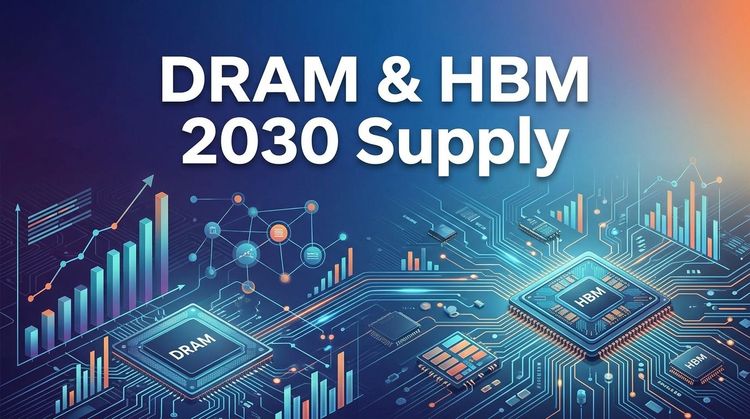
The global semiconductor memory industry is entering a structural supply imbalance that many manufacturers expect to continue through the remainder of this decade.
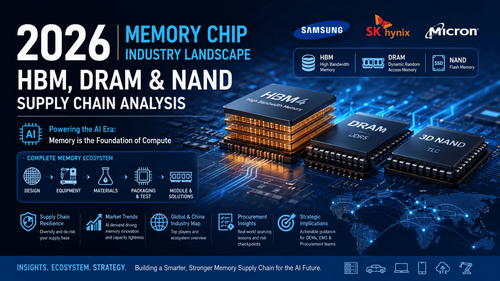
Driven by generative AI, cloud computing, and accelerated data center investments, High Bandwidth Memory (HBM) has become one of the highest priority semiconductor products in the market. As leading manufacturers dedicate more wafer capacity toward HBM3E and HBM4 production, conventional DRAM capacity is becoming increasingly constrained.
Unlike previous memory cycles driven primarily by consumer electronics, today's demand is supported by long-term AI infrastructure investment. This fundamentally changes how procurement organizations should approach memory sourcing.
Instead of expecting periodic oversupply, OEMs should prepare for a market where allocation becomes more valuable than spot pricing.
Why Procurement Teams Are Facing a Different Market
Historically, purchasing managers could often delay DRAM purchases and benefit from market corrections.
That strategy is becoming increasingly difficult.
Major memory manufacturers are prioritizing:
- HBM production
- AI server customers
- Long-term strategic contracts
- High-margin enterprise applications
This means conventional OEM customers may experience:
- Longer lead times
- Reduced allocation flexibility
- Higher minimum order quantities
- Less pricing leverage
- Earlier demand forecasting requirements
Memory procurement is gradually becoming a capacity reservation exercise rather than a purchasing transaction.
Procurement Insight: What We See During Customer Memory Sourcing Projects
One pattern repeatedly observed while supporting overseas OEM and EMS customers is that memory shortages rarely become visible when lead times increase—they become visible much earlier during RFQ discussions.
In several sourcing projects involving industrial computers, networking equipment, and embedded systems, customers initially requested a specific DRAM part number that had been qualified several years earlier.
However, after suppliers confirmed allocation restrictions, engineering teams were asked whether compatible alternatives could be introduced without redesigning the PCB.
Typical engineering validation discussions included:
- JEDEC compatibility
- Package dimensions
- Speed grade verification
- Operating temperature range
- Voltage compatibility
- SPD programming
- Long-term lifecycle availability
- AVL (Approved Vendor List) qualification status
In one project, an OEM originally requested a single Samsung industrial DDR4 module.
After allocation tightened, the purchasing team identified equivalent solutions from another qualified supplier. Although electrical specifications appeared identical, engineering required additional BIOS validation and thermal testing before approving the substitute.
The qualification process added several weeks to the production schedule—not because alternative products were unavailable, but because validation had never been completed before shortages occurred.
This situation has become increasingly common as AI demand absorbs more advanced memory production capacity.
For procurement organizations, supplier qualification should begin well before allocation becomes constrained.
Alternative Validation Is Becoming More Important Than Pricing
One significant change in today's memory market is that engineering flexibility often creates greater value than negotiating lower prices.
Experienced procurement teams increasingly maintain multiple qualified memory options for critical products.
Instead of qualifying only one manufacturer, many OEMs now validate:
- Samsung
- SK hynix
- Micron
- Kingston Industrial
- ATP Electronics
- Intelligent Memory
- Other application-specific suppliers
Maintaining engineering-approved alternatives significantly reduces supply chain disruption when allocation priorities change.
For products with long production lifecycles, alternative validation has become an important risk management strategy rather than an emergency response.
OEM Sourcing Strategies for the AI Era
Procurement organizations should consider several structural adjustments to their sourcing strategy.
Recommended practices include:
- Begin RFQ activities at least two quarters before production demand.
- Build Approved Vendor Lists (AVL) with multiple qualified memory suppliers.
- Validate pin-compatible alternatives before shortages occur.
- Forecast annual demand instead of purchasing quarter by quarter.
- Coordinate engineering and procurement decisions throughout new product introduction (NPI).
- Review supplier product lifecycle roadmaps annually.
- Reserve production capacity through long-term supply agreements whenever possible.
These practices provide considerably greater resilience than relying on spot market purchasing during allocation shortages.
Engineering Considerations Before Switching Memory Suppliers
Even when alternative memory devices appear identical, engineering teams should verify:
- Timing compatibility
- BIOS support
- Signal integrity
- Thermal performance
- PCB layout impact
- Reliability testing
- Burn-in results
- Manufacturing consistency
Completing these evaluations before supply disruptions occur can significantly shorten production recovery time.
Looking Beyond 2030
The current DRAM and HBM market reflects more than another semiconductor cycle.
As AI infrastructure continues expanding, memory manufacturing capacity will increasingly prioritize high-performance products with higher strategic value.
For OEMs and EMS providers, future competitiveness will depend less on securing the lowest price and more on building sourcing strategies that integrate procurement, engineering validation, and long-term supplier relationships.
Organizations that establish qualified alternative suppliers today will be significantly better prepared for future allocation constraints and market volatility.
Frequently Asked Questions
Frequently Asked Questions
Will DRAM shortages continue through 2030?
Current industry capacity expansion suggests that advanced memory supply will remain relatively tight as AI infrastructure continues consuming a growing percentage of wafer capacity. While pricing cycles will continue, allocation management is expected to remain an important procurement consideration.
Should OEMs qualify alternative DRAM suppliers now?
Yes. Waiting until allocation restrictions occur often extends qualification schedules by several weeks or months. Pre-qualified alternatives reduce both engineering risk and procurement delays.
Is HBM affecting conventional DDR memory supply?
Indirectly, yes. As manufacturers dedicate more advanced production resources toward HBM products, available capacity for certain conventional DRAM products becomes increasingly constrained, particularly for industrial and long-lifecycle applications.
What is the biggest procurement mistake during memory shortages?
Many organizations assume equivalent specifications automatically mean interchangeable products. In practice, BIOS compatibility, lifecycle status, thermal behavior, and customer qualification requirements often determine whether an alternative memory device can be introduced into production.