💡 Key Takeaways
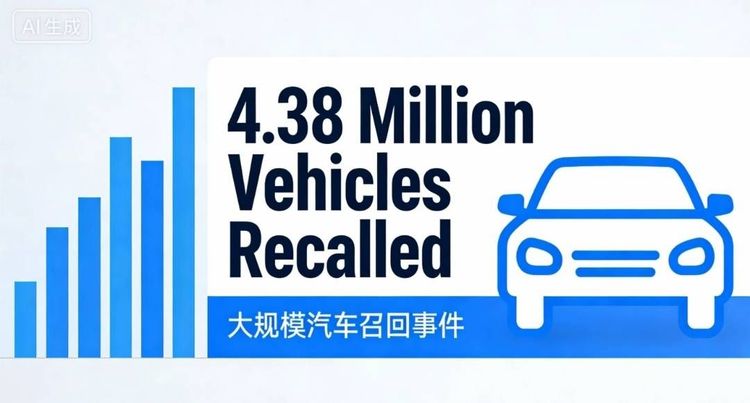
• Ford recalls 4.38M trucks and SUVs due to ITRM software defects affecting trailer stop lamps and brake functions
• U.S. recall volumes reached highest levels in a decade across consumer products and automotive sectors
• Courts focus on Article III standing through properly alleged traceability when recall and warranty remedies are available
🎯 Opening
The U.S. recorded one of its highest annual recall volumes in 2025 with 4,414 recalls across consumer products, food, drinks, pharmaceuticals and automotive components. The automotive sector saw a 13-year low, yet Ford's recent recall of 4.38 million vehicles over Integrated Trailer Module (ITRM) software flaws reveals a recurring pattern: trailer lighting and brake systems controlled by the same module, and when that module fails, critical safety functions disappear.
📊 What's Changing
Recall activity reached 10-year highs in 2025, driven by increased consumer scrutiny and regulatory enforcement. The year saw 3,295 recalls, significantly above the 10-year average of 2,900. However, the automotive sector experienced only 27.42 million units recalled—a 13-year low—suggesting either exceptional quality or hidden issues only surfacing years later.
The Ford ITRM case specifically: 4.38 million trucks and SUVs from model years 2021–2026 affected by software defects that can cause:
- Loss of trailer stop lamps
- Failure of turn signals
- Disablement of brake functions during towing
These failures occur when the ITRM module fails to communicate with the vehicle during startup or operation.
🔍 Why Old Assumptions No Longer Work
The assumption that recalls are primarily reactive responses to unexpected failures is breaking down. In 2025, courts saw increased recall class actions challenging false advertising and insufficient recall practices. Key emerging issues:
- False Advertising: Companies marketing products as safe without adequate testing
- Mislabeling: Products sold under specifications they cannot meet
- Insufficient Remedies: Delayed repairs, inadequate compensation for affected owners
For automotive suppliers and component manufacturers, recall risk extends beyond warranty claims. When safety-critical systems—lighting, brakes, steering—share integrated control modules, a single point of failure cascades across multiple subsystems. The traceability challenge becomes acute: can manufacturers identify which specific batch, lot, or production run caused the defective module?
⚡ Implications for OEM / EMS / Procurement
For sourcing teams, recall risk introduces three critical exposures:
Supply Chain Liability: If a defective component causes an accident, the entire supply chain faces scrutiny. Tier-1 suppliers may include language limiting downstream liability, but courts increasingly examine whether component manufacturers knew or should have known about defects.
Cost Recovery Challenges: Recalls are rarely isolated events. Ford's 4.38M vehicle recall impacts ITRM module suppliers, trailer lighting manufacturers, and downstream distributors. Recovery of costs through warranty claims, litigation, or insurance subrogation can take years.
Regulatory Exposure: The National Highway Traffic Safety Administration (NHTSA) monitors recall patterns. Repeated recalls of similar components across multiple OEMs can trigger deeper investigations into design flaws, manufacturing processes, or supplier qualification.
For procurement professionals, the question shifts from unit cost to total cost of ownership. A LED component costing $0.10 that fails in the field, triggering a $2,000 repair and disrupting operations, carries far greater impact than the initial purchase price suggests.
🚀 How Smart Teams Are Responding
Leading automotive suppliers and OEMs are implementing several strategies to manage recall and liability risk:
Traceability Requirements:
- Full batch traceability from wafer to finished component
- Production run and lot code tracking
- Integration with OEM warranty management systems
Supplier Qualification:
- Extended validation testing beyond standard automotive grade
- Failure analysis and root cause investigation support
- Documented response protocols and recall procedures
Contractual Protections:
- Clear indemnification clauses for component failures
- Recalls cost allocation between OEM and supplier
- Limitation of liability for design defects vs. manufacturing defects
Quality Management:
- Statistical process control (SPC) across production lots
- Automated testing of safety-critical functions
- Field failure monitoring and early warning systems
✨ Closing
Product recalls are no longer isolated remediation events—they are becoming central to product liability litigation. The Ford ITRM case demonstrates how software defects in integrated control modules can cascade across vehicle subsystems, creating safety risks and legal exposure for all supply chain participants.
For OEMs and EMS teams building supplier relationships, recall preparedness and traceability are now selection criteria as critical as price and lead time. For automotive LED suppliers and component manufacturers, the legal landscape has shifted: courts are increasingly asking whether component manufacturers demonstrated reasonable care in testing, design validation, and recall response.
If you are evaluating your supply chain's recall and liability risk exposure, reach out to discuss resilience strategies.