Language Is Not the Biggest Barrier to Chinese Chip Exports — Trust Is
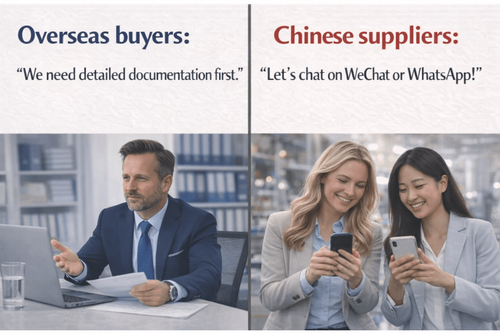
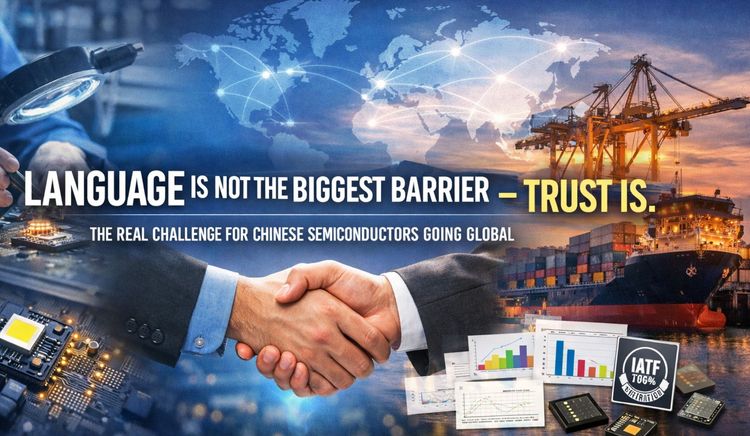
Over the past two years, what has been the core pain point for Chinese chip companies going global? Language is not the biggest barrier—trust is.
A Mexican OEM procurement manager messages you on WhatsApp: "What temperature can this batch of 3528 LEDs withstand? What's the CRI? Do you have automotive certification?"
If you respond using translation software, the other side can feel it—stiff tone, inaccurate terminology, discounted professionalism.
Three such interactions, and they turn to Taiwan or Korean suppliers.
AI agents are changing all this.
1. Language: From "Translation Tone" to "Native Professional"
Traditional Model: Google Translate → Human proofread → Send
New Model: AI agents respond directly using terminology, tone, and context familiar to procurement managers
Example:
- ❌ "This LED has high temperature resistance, CRI is 90+."
- ✅ "Rated up to 120°C junction temperature, CRI 93+, with IATF 16949 automotive certification."
The difference: the latter is the language procurement managers hear daily—not translated output.
2. Trust: From "Outside Supplier List" to "Data-Driven Verification"
Core concerns in overseas procurement:
- "Is this company reliable?"
- "Can I reach someone if there's a product issue?"
- "How's batch consistency?"
How AI agents solve this:
a) Real-time data transparency:
- Record test data for every shipment (bin split, CRI, VF distribution)
- Auto-generate batch reports (PDF/Excel)
- WhatsApp auto-send: "Batch 2408 shipped, test report attached"
b) Supply chain risk visualization:
- Integrate customs data, freight tracking, port congestion alerts
- Real-time updates: "ETA adjusted from 30 to 25 days, Shenzhen port congestion eased"
- Proactive risk notification: "XINGLIGHT raw material inventory tight, suggest ordering 3 weeks early"
c) Localized response:
- AI agents online 24/7, Mexican procurement manager asks at 3 AM and gets instant response
- Context memory: remembers customer previously asked about "automotive-grade UV LEDs," next new product auto-pushed
3. Channels: From "Passively Waiting for Inquiries" to "Active Hunting"
Traditional Model:
- Alibaba International Station, LinkedIn posts, and other inquiry-driven channels
- Most inquiries are "price shoppers," actual conversion rate <3%
AI Agent New Model:
a) Intelligent email recognition:
- Monitor purchasing emails for RFQ signals
- AI analysis: "This procurement manager does automotive lighting, recently looking for UV-C sterilization LEDs"
- Proactive contact: "Saw you're looking for UV-C 3535, we just got a batch of 280nm stock, test report attached"
b) WhatsApp private domain operations:
- AI agents don't mass-send ads, but push precisely based on customer profiles
- Customer A (automotive lighting): push automotive-grade TOP LEDs, high-temperature test data
- Customer B (indoor lighting): push high-CRI 2835, luminous flux reports
c) Inquiry prediction:
- AI analyzes historical orders: "Customer restocks every 45 days, last order was batch 2409"
- Proactive contact 15 days early: "Next order planned to ship, need to prepare inventory?"
4. Service: From "Post-Sale Problem Fixing" to "Preventive Service"
Traditional Model: Customer complaint → Tech support response → Solve problem
AI Agent Model: Predict problem → Pre-alert → Customer unaware
a) Abnormal batch alerts:
- AI detects batch 2409 CRI distribution shifted (average dropped from 93 to 91)
- Proactive notification: "Detected CRI slight decline in batch 2409, suggest substituting with batch 2410, inventory reserved"
b) Automated technical documentation:
- Customer asks: "What's the thermal resistance of 3528 LEDs?"
- AI agent instant reply: datasheet + measured thermal resistance curve + application recommendations
- No waiting for Chinese tech support to wake up, translate, reply
5. Real Case: LDeepAI's Practice
In 2025 Q4, we used AI agents to serve a Mexican automotive lighting customer:
Problem:
- Customer sent 3-5 WhatsApp messages weekly (technical questions, inventory queries, logistics tracking)
- Time difference meant Chinese team woken up at 3 AM to reply
- Customer satisfaction declining,准备转向台湾供应商
Solution:
- AI agents integrated with WhatsApp, 24/7 response
- Recorded all technical Q&A, built knowledge base
- Auto-matched batch data, test reports, logistics information
Result:
- Response time dropped from average 8 hours to <5 minutes
- Customer satisfaction recovered, orders increased 40%
- Chinese team shifted from "firefighting" to "strategic"
Core Change Summary
| Traditional Model | AI Agent Model |
|---|---|
| Language translation | Professional native language context |
| Passive trust | Data-driven verification |
| Wait for inquiries | Active hunting |
| Post-sale firefighting | Preventive service |
| Human-driven | AI + Human collaboration |
Future Outlook
AI agents won't replace humans, but enable humans to focus on high-value work:
- Negotiating large strategic orders
- Developing new products, new technologies
- Building long-term partnerships
AI agents handle standardized processes:
- 24/7 customer response
- Data generation, report output
- Risk alerts, anomaly detection
The rules of Chinese chip exports are being rewritten by AI agents.
It's not about whose chips are better—it's about who uses AI agents to make global procurement managers feel: "Communicating with this company is as smooth as with local suppliers."
#AI #Semiconductors #SupplyChain #GlobalBusiness #AIAgents #LDeepAI