💡 Key Takeaways
• The Event: V24A6V5T400BL pricing rose by 75%, increasing from 2000 RMB to 3500 RMB within four months.
• The Cause: AI infrastructure expansion absorbed shared upstream capacity across substrates, testing, and logistics.
• The Implication: Zero-inventory strategies fail once industrial markets and AI markets become structurally coupled.
⚠️ Opening
Since 2025, large-scale AI infrastructure investment has fundamentally reshaped global semiconductor demand patterns. Power modules, memory, and compute components no longer behave as isolated markets. This case study examines how AI-driven demand disrupted the availability of the V24A6V5T400BL, illustrating why zero-inventory logic increasingly optimizes for historical stability rather than present-day risk.
📉 What’s Changing
In September 2025, a Shenzhen-based distributor warned a long-term railway signaling customer about rising supply risks surrounding the V24A6V5T400BL power module. Historically, this industrial-grade DC-DC module carried a three-month lead time and traded near 2000 RMB.
By late 2025, AI data center build-outs sharply increased demand for shared upstream resources, including advanced substrates, high-reliability testing capacity, and priority logistics. Despite stable rail-sector demand, industrial power modules were pushed into allocation queues, extending lead times toward eight to nine months without any demand surge from the rail industry itself.
📊 Data and Comparison
• Timeframe: September 2025 to January 2026
• Lead time change: 3 months → 8–9 months
• Spot price change: ~2000 RMB → ~3500 RMB
• Rail signaling demand: No material increase
The price escalation reflected structural scarcity caused by upstream capacity reallocation rather than speculative behavior.
👇 Why Old Assumptions No Longer Work
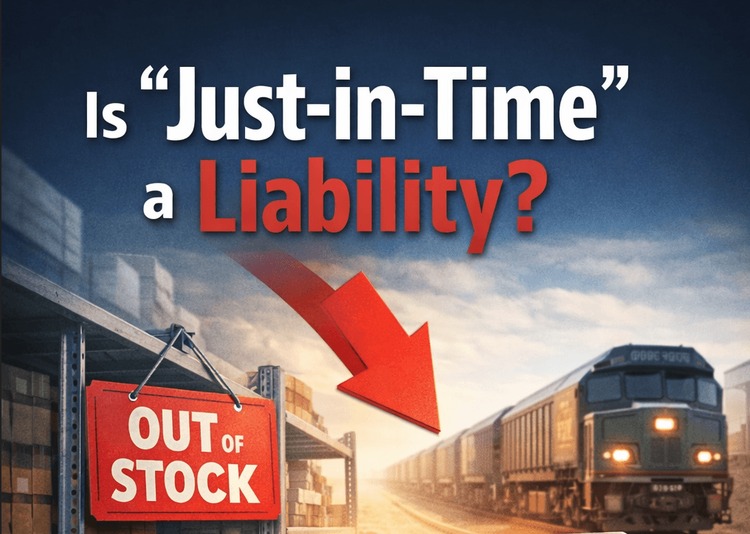
Zero-inventory models assume that unrelated end markets remain independent. That assumption no longer holds. In this case, a Tier-2 rail signaling supplier continued placing monthly orders strictly aligned with project schedules. Even after early warnings, procurement maintained a three-month planning horizon, assuming industrial components were insulated from AI-driven volatility.
Once upstream capacity is shared, demand shocks propagate across component categories regardless of end-market relevance.
🚀 Implications for OEM / EMS / Procurement
By January 2026, metro signaling installation and acceptance deadlines were approaching, yet factory orders remained unshipped due to allocation delays. With no buffer inventory and no qualified second source, the customer was forced to source limited quantities through secondary channels at approximately 3500 RMB per unit.
This premium was not opportunistic. It represented the structural cost of urgency within a supply chain reshaped by AI-driven demand concentration.
🔒 How Smart Teams Are Responding
Forward-looking OEM and EMS organizations are revising their operating assumptions. Inventory is no longer evaluated solely on turnover efficiency, but on exposure to cross-market demand shocks. Safety stock is increasingly treated as strategic risk coverage, while engineering teams accelerate alternate-source qualification and design flexibility.
The objective is not to predict which sector will surge next, but to remain operational when it does.
✨ Closing
AI has not merely increased demand; it has structurally linked markets that once behaved independently. In this environment, zero-inventory strategies optimize for a world that no longer exists. Supply chain resilience now depends on accepting uncertainty as a baseline rather than an exception.