Specifications
| Type | Description |
|---|---|
| Part Number | XL-TD2012UGC |
| Manufacturer | XINGLIGHT |
| Product Type | SMD LED |
| Category | LED |
| Outline Dimensions | 2.0 x 1.25 x 1.4 mm; L/W/H |
| Luminous Color | High brightness green; transparent colloid |
| Colloid Type | Transparent; package resin/colloid |
| Moisture Sensitivity Level | MSL 3; moisture sensitivity level |
| RoHS Compliance | Complied with RoHS Directive; environmental protection product |
| Maximum Power Dissipation | 70 mW; Ta=25°C |
| Maximum Continuous Forward Current | 20 mA; Ta=25°C |
| Peak Forward Current | 80 mA; pulse width <=0.1 ms, duty <=1/10, Ta=25°C |
| Maximum Reverse Voltage | 5 V; Ta=25°C |
| ESD Antistatic Ability | 2000 V; Ta=25°C |
| Operating Temperature Range | -40 to +85 °C; Ta=25°C rating table |
| Storage Temperature Range | -40 to +85 °C; Ta=25°C rating table |
| Lead Soldering Temperature/Time | 260°C <=6 s; absolute maximum rating |
| Luminous Intensity | typ 3000 mcd; IF=20 mA, Ta=25°C |
| Dominant Wavelength | min 520 nm, max 530 nm; IF=20 mA, Ta=25°C |
| Peak Wavelength | typ 525 nm; IF=20 mA, Ta=25°C |
| Forward Voltage | min 2.5 V, max 3.1 V; IF=20 mA, Ta=25°C |
| Viewing Angle | typ 30°; 2θ1/2, IF=20 mA, Ta=25°C |
| Reverse Current | max 5 µA; VR=5 V, Ta=25°C |
| Brightness Grade B2 | 1800 to 2100 mcd; IF=20 mA, brightness error ±10% |
| Brightness Grade B3 | 2100 to 2500 mcd; IF=20 mA, brightness error ±10% |
| Brightness Grade B4 | 2500 to 3000 mcd; IF=20 mA, brightness error ±10% |
| Brightness Grade B5 | 3000 to 3500 mcd; IF=20 mA, brightness error ±10% |
| Brightness Grade B6 | 3500 to 4000 mcd; IF=20 mA, brightness error ±10% |
| Brightness Grade B7 | 4000 to 5000 mcd; IF=20 mA, brightness error ±10% |
| Voltage Grade N11-7 | 2.5 to 2.7 V; IF=20 mA, voltage error ±0.1 V |
| Voltage Grade N11-8 | 2.7 to 2.9 V; IF=20 mA, voltage error ±0.1 V |
| Voltage Grade N11-9 | 2.9 to 3.1 V; IF=20 mA, voltage error ±0.1 V |
| Wavelength Grade HG03 | 520 to 525 nm; IF=20 mA, wavelength error ±1 nm |
| Wavelength Grade HG04 | 525 to 530 nm; IF=20 mA, wavelength error ±1 nm |
| Test Environment Temperature | 25 ±5°C; unless otherwise indicated |
| Working Life Test | 1000 hours; continuous lighting at maximum rated current at room temperature; tested at 20 mA |
| High Temperature and High Humidity Storage Test | 240 hours ±2 hours; IR reflow in-board 2 times; Ta=85±5°C, RH=90-95% |
| High Temperature Storage Test | 1000 hours; Ta=85±5°C |
| Low Temperature Storage Test | 1000 hours; Ta=-40±5°C |
| Cold and Hot Cycle Test | 100 cycles; 105°C 30 min, 25°C 5 min, -55°C 30 min, 25°C 5 min |
| Hot and Cold Impact Test | 100 cycles; IR reflow in-board 2 times; 100±5°C for 20 min and -40±5°C for 20 min |
| Anti-Tin Test | 10±1 s, 2 times; soldering temperature 260±5°C |
| Lead Process Reflow Peak Temperature | 235°C +5/-0°C; keep at peak for 10-15 s; heating rate max 3°C/s; cooling rate max 6°C/s |
| Lead-Free Process Reflow Peak Temperature | 255°C +0/-5°C; keep at peak for 5-10 s; heating rate max 3°C/s; cooling rate max 6°C/s |
| Weldability Test | Tin loading rate >=95% pad area; soldering temperature 235±5°C; immersion speed 25±2.5 mm/s; immersion time 2±0.5 s |
| Outline Dimension Tolerance | ±0.25 mm; unless otherwise noted |
| Tape and Reel Dimension Tolerance | ±0.1 mm; belt and disk dimensions |
| Hand Soldering Iron Power | <30 W; recommended for hand soldering |
| Hand Soldering Temperature | <300°C; each terminal once only, less than 3 s |
| Maximum Reflow Cycles | 2 times; reflow soldering |
| Recommended Maximum Welding Temperature | 240±5°C for 6 s; product recommended maximum welding temperature |
| Alcohol Cleaning Condition | Under 30°C for 3 min or under 50°C for 30 s; after soldering |
| Ultrasonic Cleaning Power | max 300 W; pretest recommended before cleaning |
| Unopened Storage Condition | 30°C or less, less than 60% RH, use within 1 year; before opening package |
| Opened Storage Condition | 30°C or less, less than 40% RH, solder within 168 hours; after opening package |
| Recommended Workshop Condition | 30°C or less, less than 60% RH; product operation/workshop environment |
| Baking Condition | 60±5°C for 24 hours; if desiccant/package failed or storage time exceeded |
| Datasheet Status | request_only |
Product Overview
XL-TD2012UGC is a XINGLIGHT high brightness green SMD LED with a 2.0 x 1.25 x 1.4 mm outline and transparent package colloid. It is categorized as an LED component and uses a compact surface-mount package for board-level assembly where green visual indication is required.
At Ta=25°C, the absolute maximum ratings include 70 mW power dissipation, 20 mA continuous forward current, 80 mA peak forward current under pulsed conditions, 5 V maximum reverse voltage, and 2000 V ESD antistatic ability. Electrical and optical data at IF=20 mA include 2.5 to 3.1 V forward voltage, 3000 mcd typical luminous intensity, 525 nm typical peak wavelength, 520 to 530 nm dominant wavelength, and 30° typical viewing angle.
Assembly data includes MSL 3 moisture sensitivity, RoHS compliance, up to two reflow soldering cycles, and recommended maximum welding temperature of 240±5°C for 6 seconds. Storage guidance specifies unopened storage at 30°C or less and below 60% RH, with opened-package soldering within 168 hours at 30°C or less and below 40% RH.
Key Features
- 2.0 x 1.25 x 1.4 mm SMD LED package
- High brightness green output with transparent colloid
- MSL 3 moisture sensitivity level
- RoHS Directive compliance stated in datasheet
- 20 mA maximum continuous forward current at Ta=25°C
- 70 mW maximum power dissipation at Ta=25°C
- 520 to 530 nm dominant wavelength at IF=20 mA
- 525 nm typical peak wavelength at IF=20 mA
- 2.5 to 3.1 V forward voltage range
- 30° typical viewing angle at IF=20 mA
- Two maximum reflow soldering cycles specified
- Opened package soldering window is 168 hours
Typical Applications
- Green status indicators
- Compact panel indicators
- Display backlighting points
- Signal indication circuits
- Board-level visual alerts
- Instrument front panels
- Low-current green illumination
- Narrow-angle indicator windows
Procurement Notes
When requesting a quote for XL-TD2012UGC, buyers should confirm the manufacturer, package or case, required quantity, target date code, compliance documents, packing method, destination country and expected delivery schedule.
If alternatives are acceptable, buyers should share the approved vendor list, required electrical or optical limits, package constraints and qualification requirements. Any alternative part should be reviewed by the buyer's engineering team before production use.
For LED and optoelectronic sourcing, brightness bin, wavelength or color temperature bin, forward voltage range, viewing angle, moisture sensitivity level and soldering process limits may affect final selection, availability and lead time.
Related Technical Articles
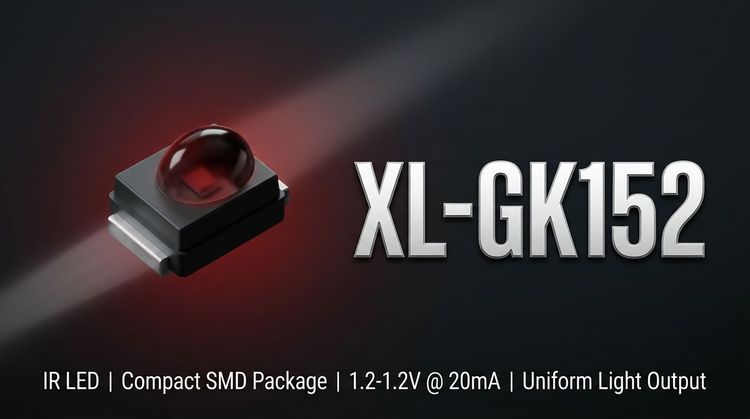
XL-GK152 Through-Beam Sensor: Thermal & Signal Drift Analysis
The XINGLIGHT XL-GK152 is a 940nm through-beam photoelectric switch designed for high-reliability object detection in compact OEM circuits. This technical analysis evaluates cri...
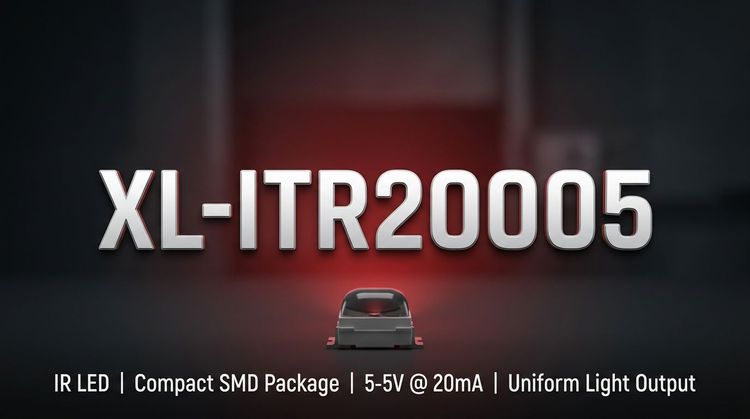
XL-ITR20005 Transmissive Sensor: SMT Integration & Signal Consistency
The XL-ITR20005 from XINGLIGHT is a transmissive photoelectric switch designed for compact automation and consumer electronics, utilizing a 940nm infrared emitter and phototrans...
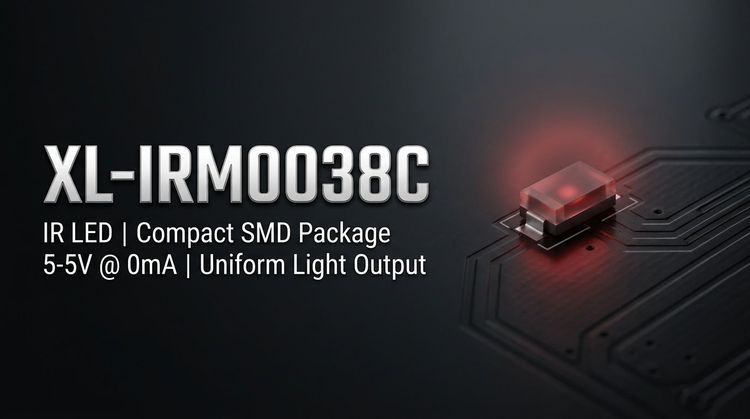
XL-IRM0038C IR Receiver: Evaluating 37.9kHz Immunity & SMT Integration
The XL-IRM0038C from XINGLIGHT is a LED designed for indicator and backlight applications. This technical guide helps design engineers and procurement teams evaluate the compone...
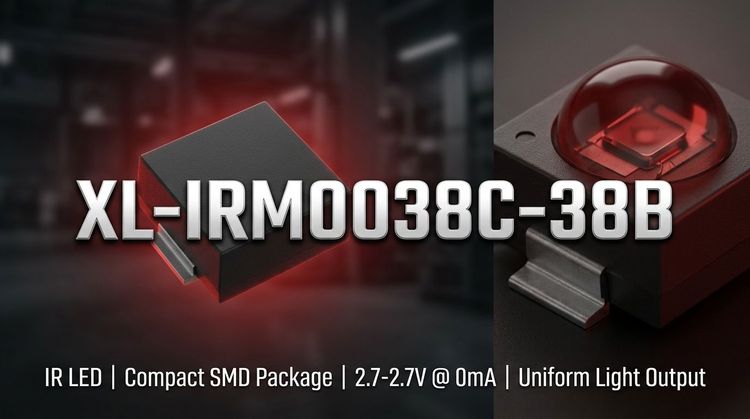
XL-IRM0038C-38B SMD LED — Technical Specifications & Design Guide
The XL-IRM0038C-38B from XINGLIGHT is a LED designed for indicator and backlight applications. This technical guide helps design engineers and procurement teams evaluate the com...
FAQ
What package size does XL-TD2012UGC use?
XL-TD2012UGC uses a surface-mount LED package with outline dimensions of 2.0 x 1.25 x 1.4 mm. The datasheet also lists an outline dimension tolerance of ±0.25 mm unless otherwise noted.
What are the main optical specifications at 20 mA?
At IF=20 mA and Ta=25°C, the LED has 3000 mcd typical luminous intensity, 520 to 530 nm dominant wavelength, 525 nm typical peak wavelength, and a typical viewing angle of 30°.
What electrical limits apply at Ta=25°C?
The datasheet specifies 70 mW maximum power dissipation, 20 mA maximum continuous forward current, 80 mA peak forward current under pulse limits, 5 V maximum reverse voltage, and 2000 V ESD antistatic ability.
How should opened packages be stored before soldering?
After opening the package, storage should be at 30°C or less and less than 40% RH, with soldering completed within 168 hours. If storage limits are exceeded or packaging fails, baking is specified at 60±5°C for 24 hours.
Technical Review & Sourcing Note
Prepared by LDeepAI Component Sourcing Team. Reviewed for RFQ, documentation and alternative sourcing use. Last updated: July 28, 2026.
This page is based on manufacturer datasheet information and LDeepAI sourcing review. Specifications should be verified against the official manufacturer datasheet before final procurement or design approval. Final electrical, optical and reliability approval should be confirmed by the buyer's engineering team.