AI Work Capacity Doubles Every 4 Months: Future Implications
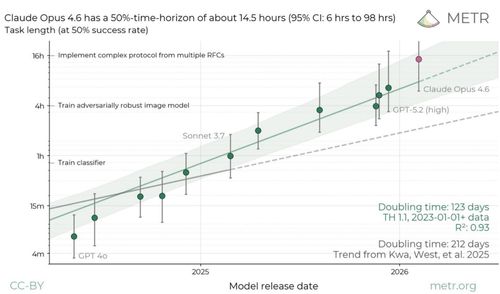
AI work capacity doubles every 4 months. By 2041, a single AI agent could complete 58 billion years of human work, exceeding the universe's age. Strategic planning becomes crucial.
Category archive of Tech Hub insights
AI work capacity doubles every 4 months. By 2041, a single AI agent could complete 58 billion years of human work, exceeding the universe's age. Strategic planning becomes crucial.
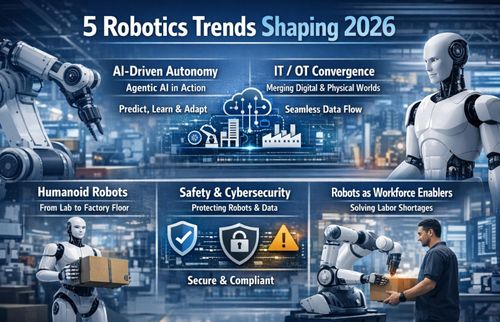
Global robotics market reaches $16.7B. AI-driven autonomy, IT/OT convergence, and humanoids move beyond automation toward production deployment.
Global memory shortage triggered by AI demand is impacting automotive pricing and production. Ford CFO signals supply pressure while OEMs face higher BOM costs.
Apple's three AI devices position as iPhone accessories, not replacements. Supply chain implications for OEM partners as production starts December 2026.
China's humanoid robots dominated 2026 Spring Festival Gala, demonstrating advanced control and fault recovery capabilities. The showcase signals industrial maturity with 90% glob…
AI-driven memory shortage is reshaping semiconductor supply chains. OEMs face unprecedented pricing pressure while strategic partnerships emerge as critical buffers against alloca…
The internet era has ended. Agents are the new masters of software, requiring a fundamental shift in thinking from DAU and attention economy to Token consumption and productivity.
Moore Threads' MTT S5000 GPU delivers 1000 TFLOPS with FP8 support, 80GB HBM, targeting H100 performance for large model training.
TSMC exits GaN foundry by 2027 as GF and VIS take over. GaN market grows 42% CAGR to 2030, driven by data centers and automotive demand.
2026 MEMS consolidation signals structural shifts from consumer saturation to automotive and industrial growth. OEMs must reassess supplier scale, IP depth, and long-term resilien…
ASML 2025 revenue rebounded, but the real shift is structural: EUV scaling advanced nodes, DUV sustaining volume demand, and lifecycle services reshaping supply risk.
2025 semiconductor distributor rankings show WT, WPG, Arrow, and Avnet reshaping sourcing power, pricing leverage, and OEM procurement strategy.
Global semiconductor revenue is projected to exceed USD 1 trillion in 2026, driven by AI, data centers, and memory recovery, marking a structural industry shift.
MLCC pricing is diverging as AI, EV, and industrial demand tightens high-spec supply while consumer MLCCs remain oversupplied. OEMs face structural sourcing shifts.
SpaceX’s reported $250B xAI acquisition highlights a shift where AI moves from support tool to core infrastructure for autonomous space systems.
CPUs, GPUs, NPUs and DPUs now coexist in the same system. This guide explains what each processor does, why roles are shifting, and how OEMs should allocate workloads.
The DRAM industry collapsed from dozens of players to three survivors. Capital intensity, technology cycles, and price volatility explain why memory inevitably consolidates.
Gartner data shows 2025 semiconductor revenue reaching $793B, with AI chips driving one-third of demand and reshaping supplier concentration and sourcing strategy.
Despite extreme costs, 2nm capacity is filling fast. This article explains why OEMs keep lining up, and what it means for procurement and supply chain planning.
A pragmatic outlook on ten semiconductor trends to watch in 2026, covering AI-driven demand, advanced nodes, memory cycles, geopolitics, and structural risks.
LED technology insights, memory sourcing analysis, IC alternatives, verified China sourcing